
After a person passes away, their assets do not transfer automatically. To register inherited property, clear bank accounts, or manage the estate, you must obtain a formal order from the Registrar of Inheritance.
1. Succession/Inheritance Order (Tzav Yerusha)
An inheritance order is filed when the deceased **did not leave a will**. In this case, assets are distributed according to default statutory rules, typically split 50/50 between the spouse and children.
2. Probate Order (Tzav Kiyum Tzava'a)
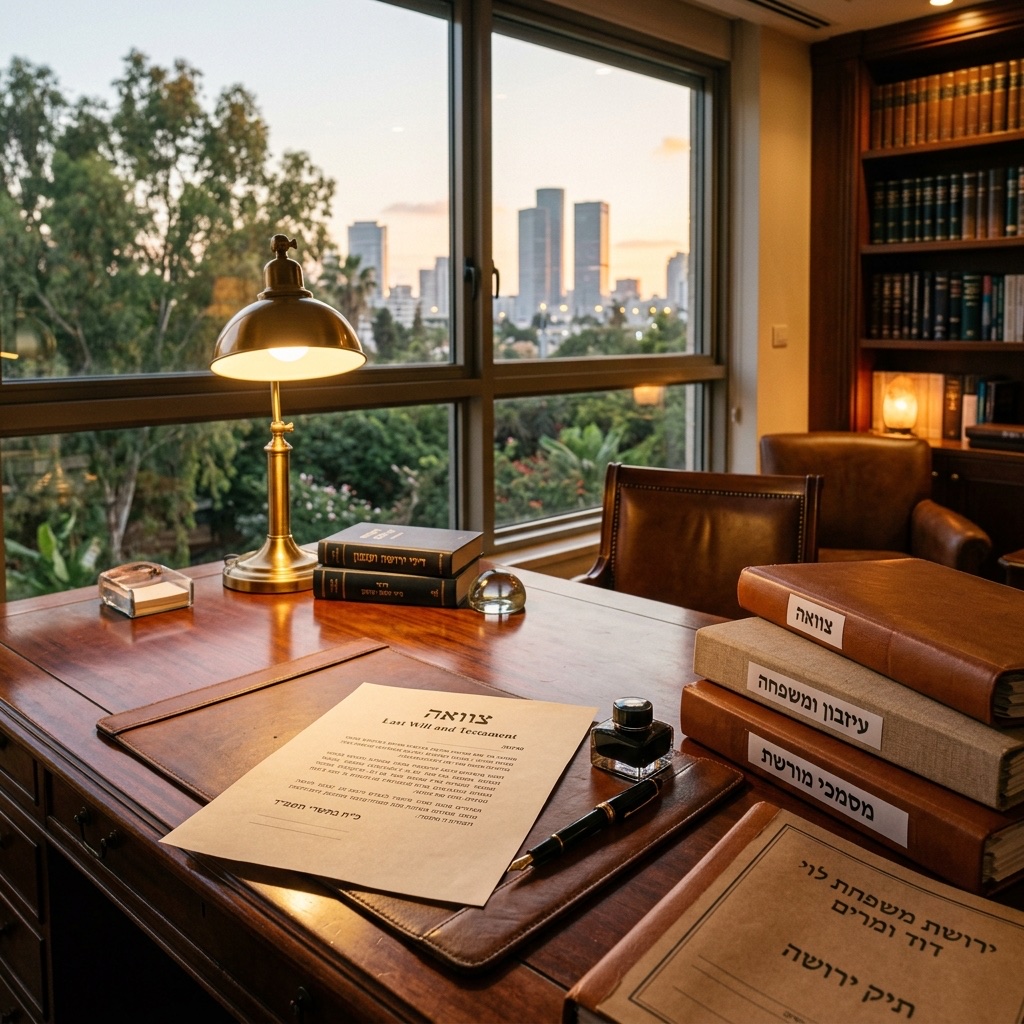
A probate order is requested when the deceased **left a valid will**. The order validates the will, directing executors to distribute all property strictly according to the deceased's specific instructions.
Filing the Application
Applications can be filed online with the Registrar. Documents needed include a death certificate, proof of notice to other heirs, and the original will. The registrar publishes a public notice to allow objections within 14 days.